Blue Mosque Dress Code

What to wear, what's provided at the entrance, and how to stay comfortable in every season.

Book a Guided Tour →

The Blue Mosque has a strict dress code, and it is enforced without exception. It doesn't matter where you're from, what religion you follow, or whether you're visiting as a tourist or coming to pray — if you're not dressed appropriately, you won't get through the door. Every day, visitors are turned away at the entrance or sent to collect coverings before they can enter.

The good news is that the requirements are straightforward, easy to prepare for, and entirely manageable even if you're visiting Istanbul in the middle of August. This page covers exactly what you need to wear, what happens if you forget something, and how to stay comfortable without compromising on the dress code.

The Rules

Women

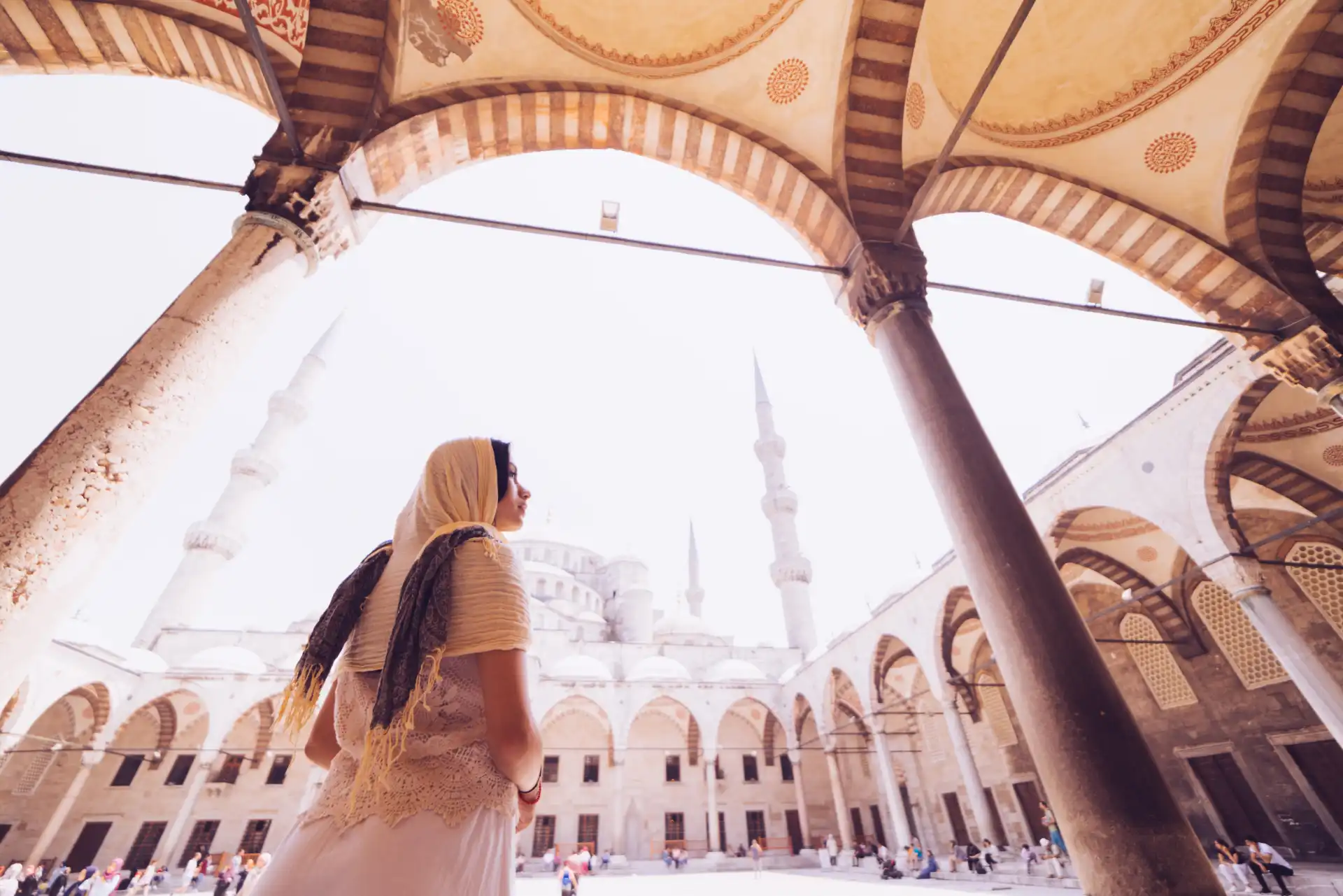
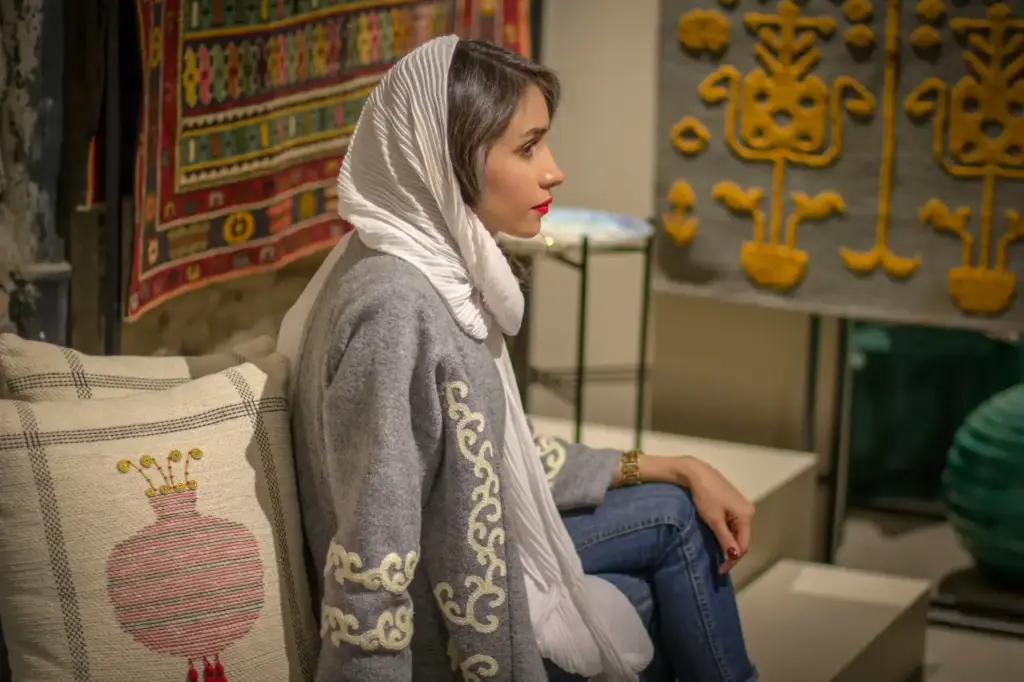
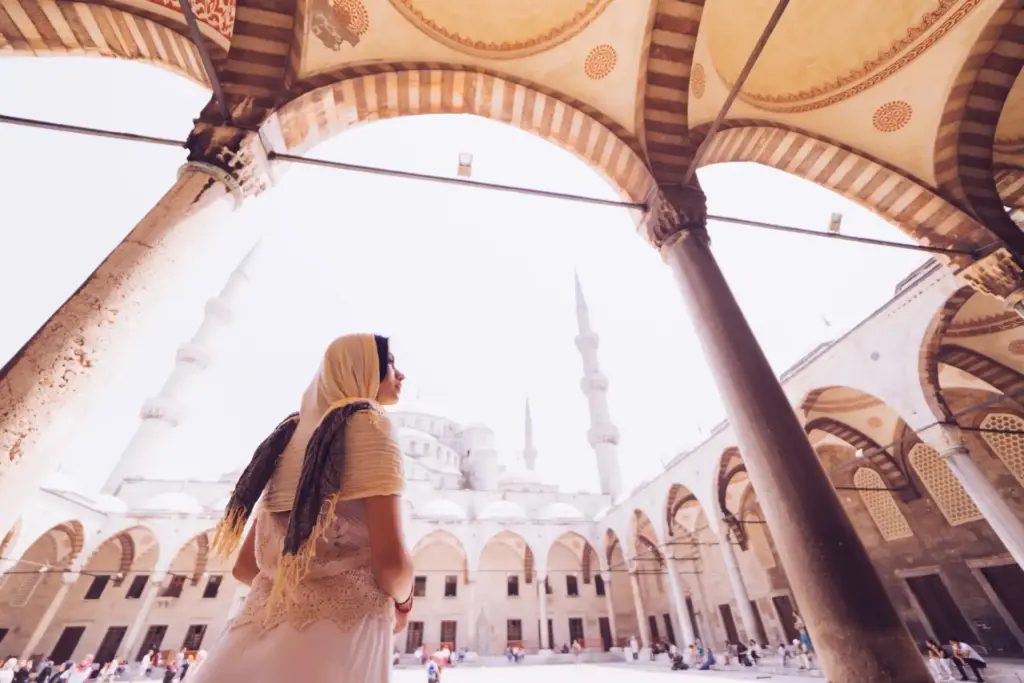
Hair: Must be fully covered with a headscarf. This means all of your hair — not just the top of your head. A scarf draped loosely over your crown with hair visible at the sides or back will not pass. The scarf should cover your hair, ears, and neck. It doesn't need to be tied in any particular style — a simple wrap that stays in place is fine.

Shoulders: Must be completely covered. No sleeveless tops, no spaghetti straps, no off-the-shoulder cuts. A t-shirt, blouse, or long-sleeved top all work. A cardigan or light jacket over a sleeveless top is also acceptable — as long as your shoulders are covered when you walk in, you're fine.

Legs: Must be covered below the knee. Trousers, jeans, a long skirt, or a dress that falls below the knee are all acceptable. Leggings on their own are generally allowed if they're opaque, but a skirt or tunic over them is a safer choice. Shorts, miniskirts, and anything above the knee will be refused.

Neckline: Low-cut tops are not appropriate. You don't need a high collar, but visible cleavage will be flagged at the entrance. A regular t-shirt or blouse neckline is fine.

Shoes: You'll remove your shoes before entering, so the type of shoe doesn't matter for the dress code. That said, sandals or slip-ons are practical because you'll be taking them on and off. You'll walk inside the mosque in socks or bare feet.

Men

Shoulders: Must be covered. No sleeveless shirts, no tank tops, no vests. A regular t-shirt is fine.

Legs: Must be covered below the knee. Long trousers or jeans are ideal. Shorts that fall below the knee are sometimes accepted, but it depends on the staff at the entrance — long trousers are the only guaranteed option. Shorts above the knee will be refused.

Shoes: Same as women — you'll remove them before entering. Wear something easy to slip on and off.

Hats: Men are not required to cover their heads, but it's not prohibited either. Baseball caps are fine to wear inside.

Children

The same dress code applies to children, though enforcement is more relaxed for very young kids. As a general rule, children old enough to walk independently should follow the same shoulder and knee coverage rules. Toddlers and babies in arms or pushchairs are not typically checked.
What Happens If You Arrive Underdressed

You won't be turned away permanently — you'll just need to cover up before entering. The mosque provides free coverings at the entrance: headscarves for women and wrap-around skirts for anyone (men or women) whose legs aren't sufficiently covered.

These coverings work, but they're not ideal. They're communal items that are reused by thousands of visitors each week. They're basic fabric wraps in dark blue or grey, they don't always smell fresh, and they can feel uncomfortable in hot weather. If you have the option to bring your own, you should.

There are also vendors outside the mosque selling headscarves and light wraps for a few lira. The quality varies, but they're an affordable last-minute option if you've forgotten to bring your own and don't want to use the communal ones.

What to Wear in Summer

This is the question everyone has. Istanbul in July and August is hot — regularly above 30°C — and the idea of covering your arms, legs, and hair while standing in a 45-minute security queue sounds miserable. Here's how to handle it:

Lightweight, breathable fabrics are your friend. A loose cotton or linen maxi dress covers everything the mosque requires while keeping you far cooler than jeans. A thin, long-sleeved shirt in a light fabric is more comfortable than a heavy t-shirt in the sun.

Layer strategically. If you're spending the day sightseeing and only part of it at the mosque, carry a light scarf and a cardigan in your bag. Put them on when you arrive, take them off when you leave. You don't need to dress conservatively all day — just for the mosque visit.

A large cotton scarf does triple duty. It works as a headscarf inside the mosque, a shoulder cover for Hagia Sophia (which has the same dress code), and a sun shade while you're walking around Sultanahmet. It's the single most useful item you can bring to Istanbul in summer.

Wear socks you're happy walking in. The mosque floor is carpeted, and in summer the carpet can be warm from the bodies and the sun. Thin, comfortable socks are better than thick hiking socks, and far better than bare feet on a carpet that thousands of people walk on daily.

What to Wear in Winter

Winter is simpler from a dress code perspective — you'll already be wearing long trousers, closed shoes, and layers. The main thing to consider is the shoe situation. You'll remove your shoes and carry them in a bag, so boots with lots of buckles and laces are inconvenient. Slip-on shoes or simple lace-ups are faster and easier.

The mosque interior is not heated (it's a 400-year-old stone building with a 43-metre dome), so it can be cool inside during December and January. Keep your coat on — there's no rule against it.

Bring warm socks. Walking on carpet in thin socks in a cold stone building is not pleasant. Wool or thick cotton socks make the visit significantly more comfortable in winter.

Does Hagia Sophia Have the Same Dress Code?

Yes — almost identical. Hagia Sophia, which is also a functioning mosque, requires women to cover their hair, shoulders, and knees, and men to cover their shoulders and knees. If you're visiting both in the same morning (which most visitors do), you only need to prepare once.

The main difference is that Hagia Sophia does not provide free coverings at the entrance. You can purchase headscarves and wraps at the ticket counter, but this causes delays — especially if you've bought a skip-the-line ticket. Bring your own and you'll avoid the problem entirely.

The Basilica Cistern has no dress code — it's an underground water reservoir, not a religious site. Wear whatever you like, though comfortable shoes are recommended as the walkways can be damp and slippery.

Do I Need to Buy Anything Special?

No. You don't need to buy a specific type of headscarf, a prayer outfit, or any specialised clothing. The mosque isn't checking for a particular style — they're checking for coverage. Anything you already own that covers the required areas is fine.

If you want to buy a headscarf in Istanbul — either as a practical item or a souvenir — the Grand Bazaar and the Arasta Bazaar (directly behind the Blue Mosque) both have excellent selections of silk and cotton scarves at reasonable prices. Expect to pay 50–150 TL for a nice cotton scarf and 150–400 TL for silk, depending on your bargaining skills.

Frequently Asked Questions

Yes. Jeans are perfectly fine for both men and women, as long as they cover the knee. Ripped jeans with holes above the knee may be refused — if in doubt, bring a wrap to cover any exposed skin.