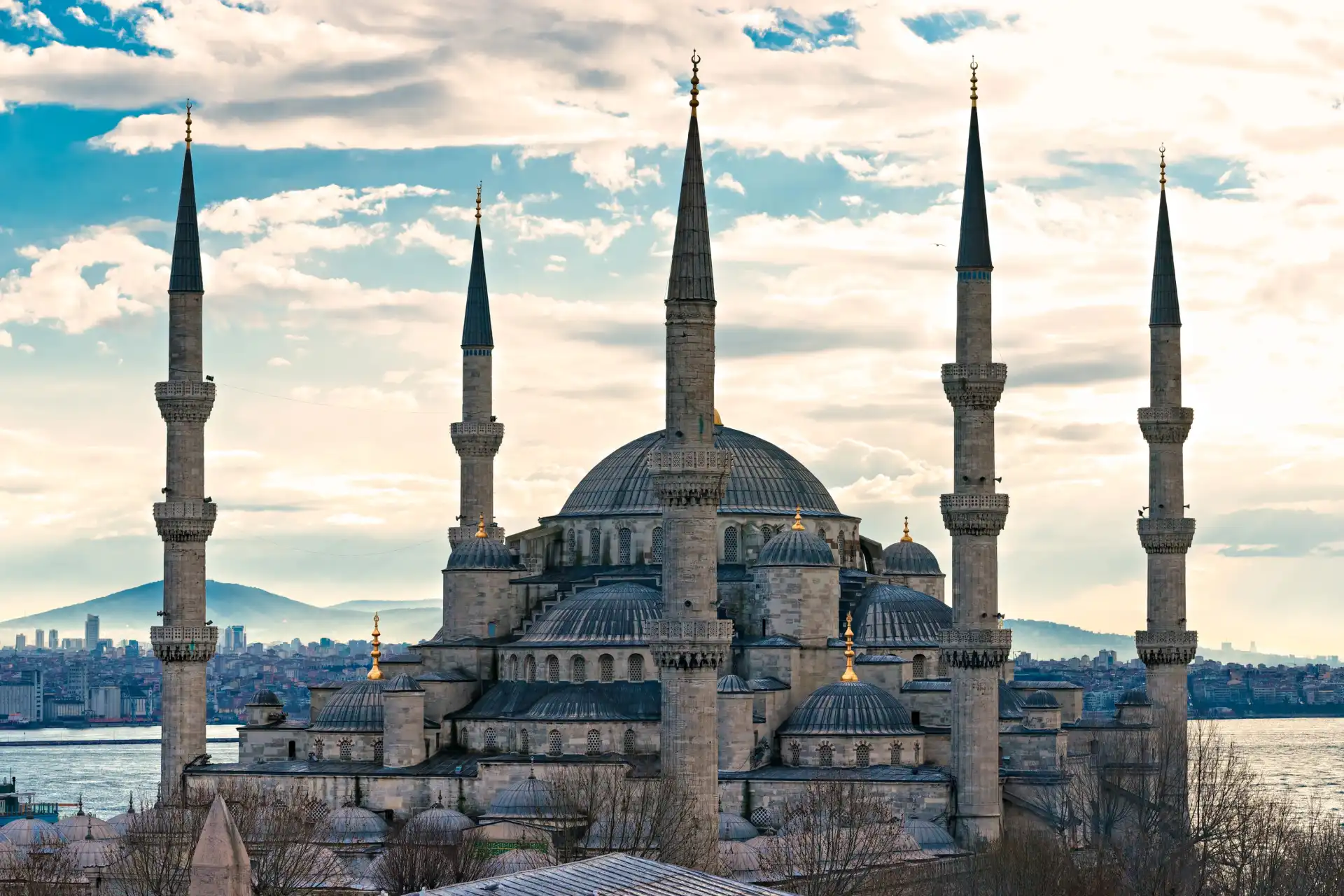
The Blue Mosque
Over 20,000 luminous İznik tiles. Six minarets piercing the sky. 400 years of unbroken devotion. Experience the crown jewel of Ottoman architecture.
A Masterpiece of Ottoman Architecture
Rising majestically over Istanbul's historic Sultanahmet district, the Sultan Ahmed Mosque — known worldwide as the Blue Mosque — represents one of the most breathtaking achievements of human civilization. Commissioned by Sultan Ahmed I at just 19, this imperial mosque was designed to rival the neighbouring Hagia Sophia.
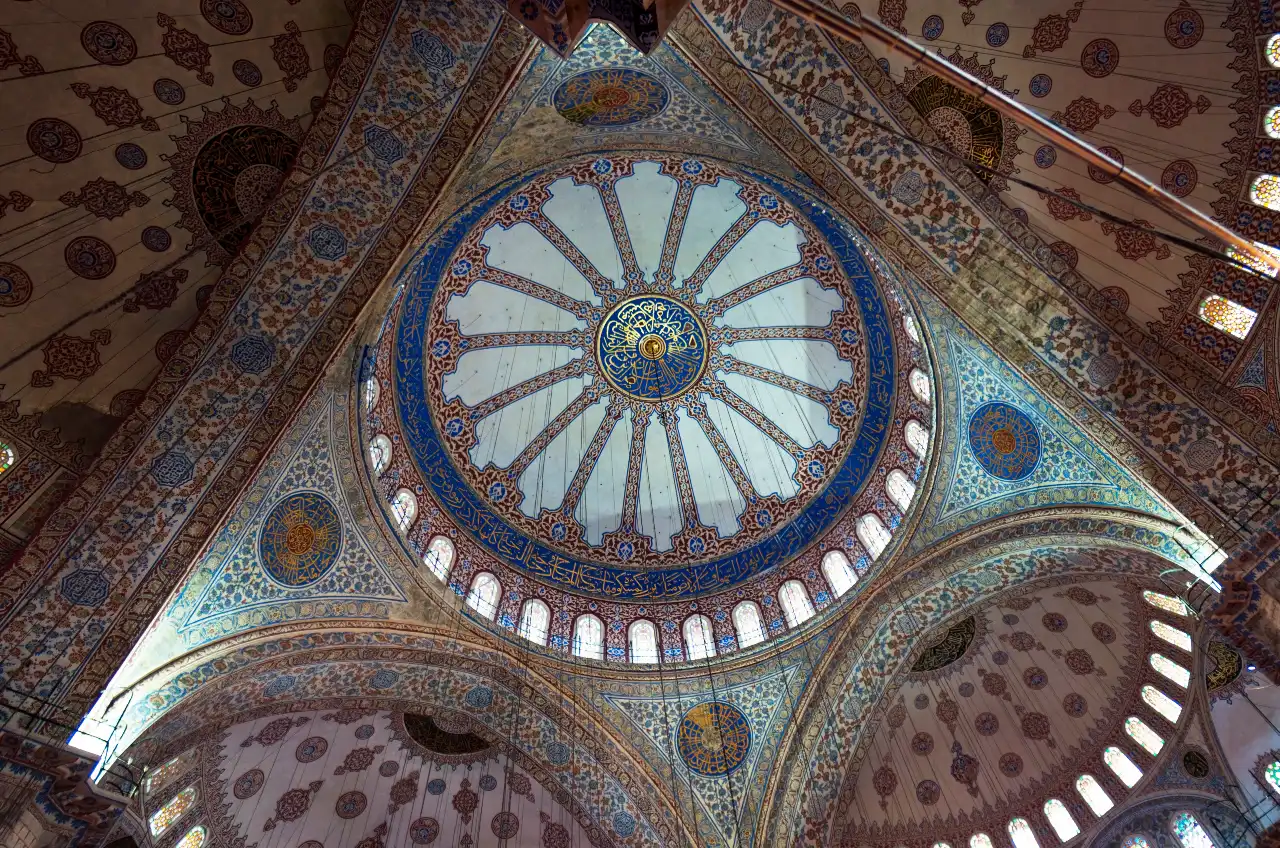
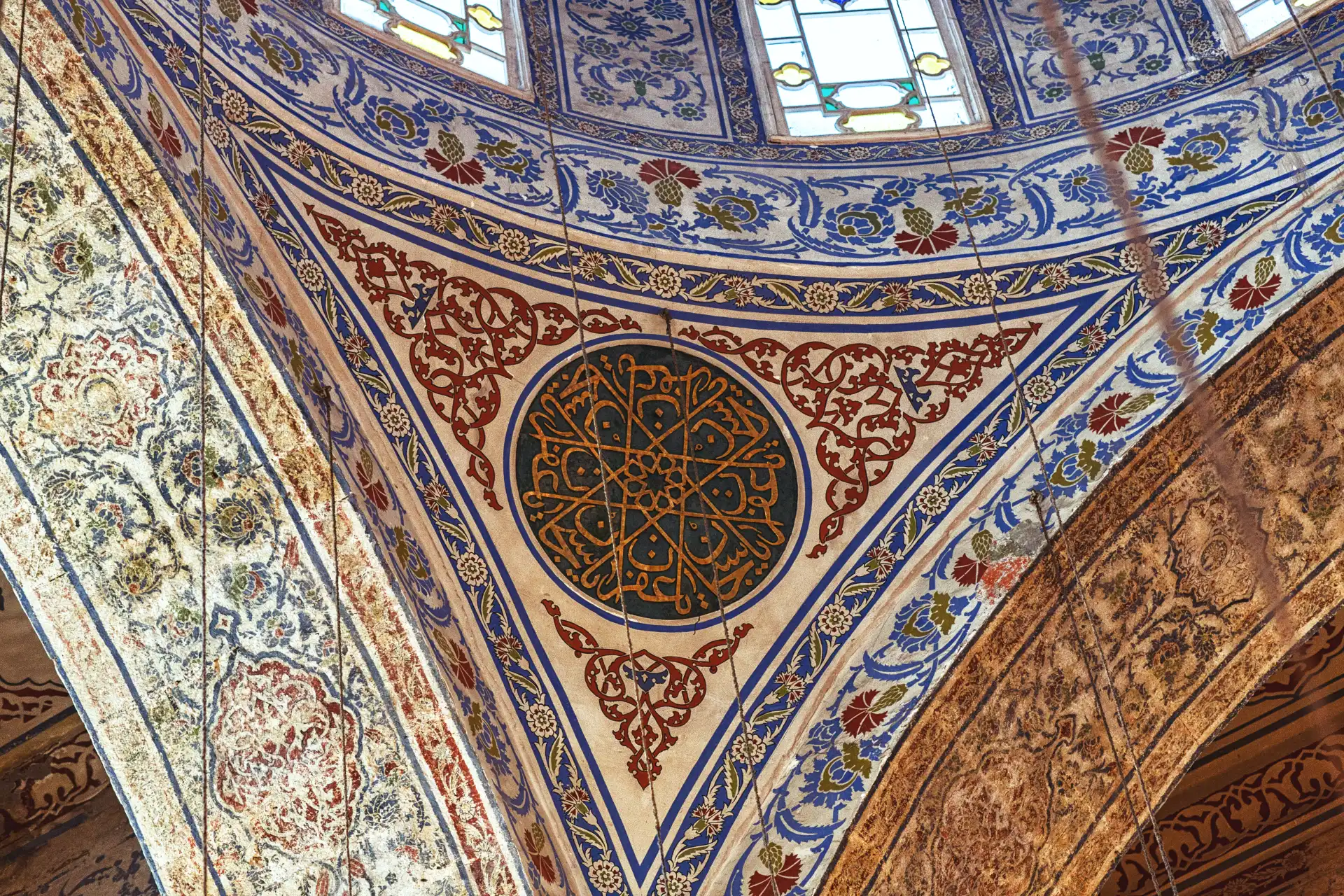
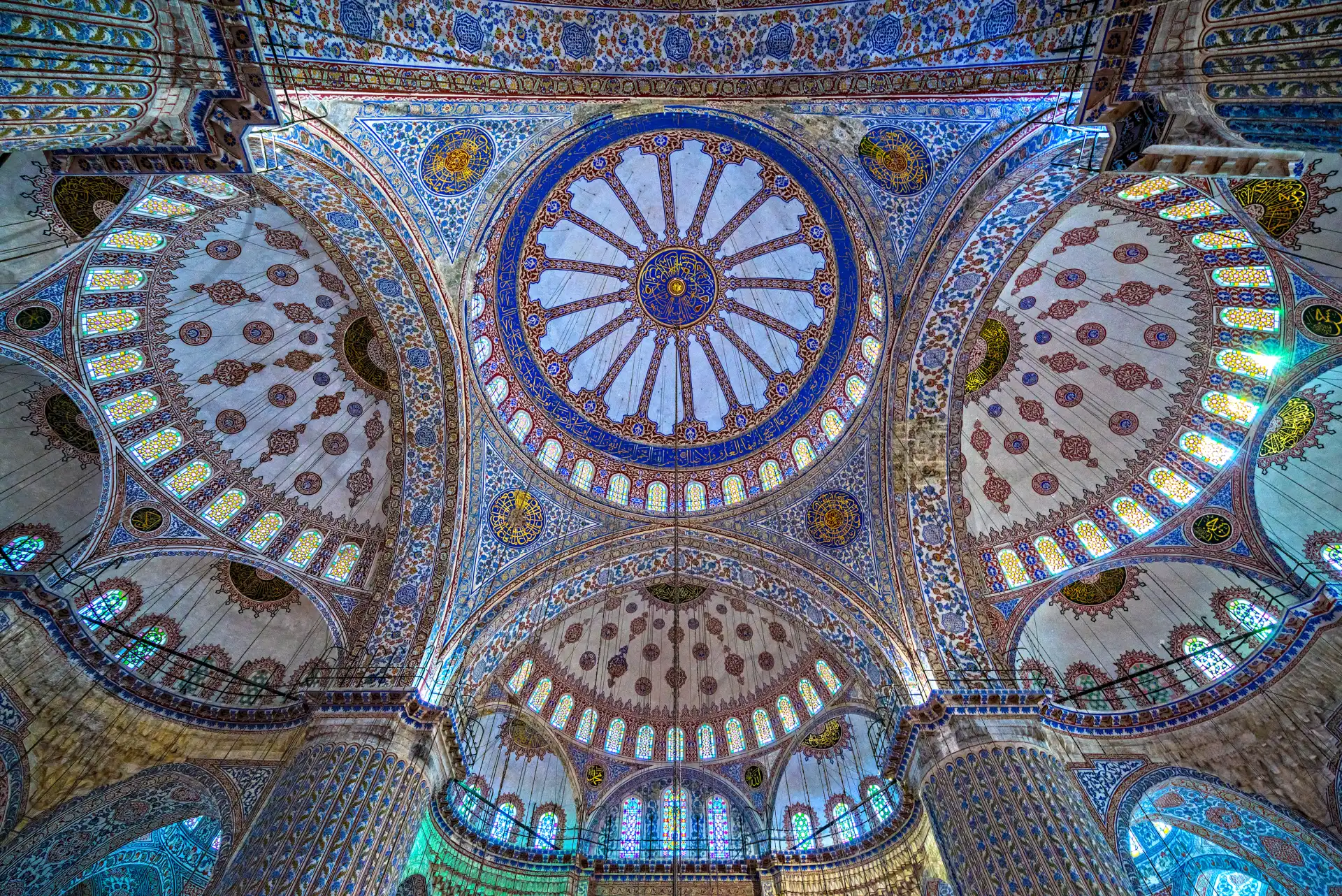
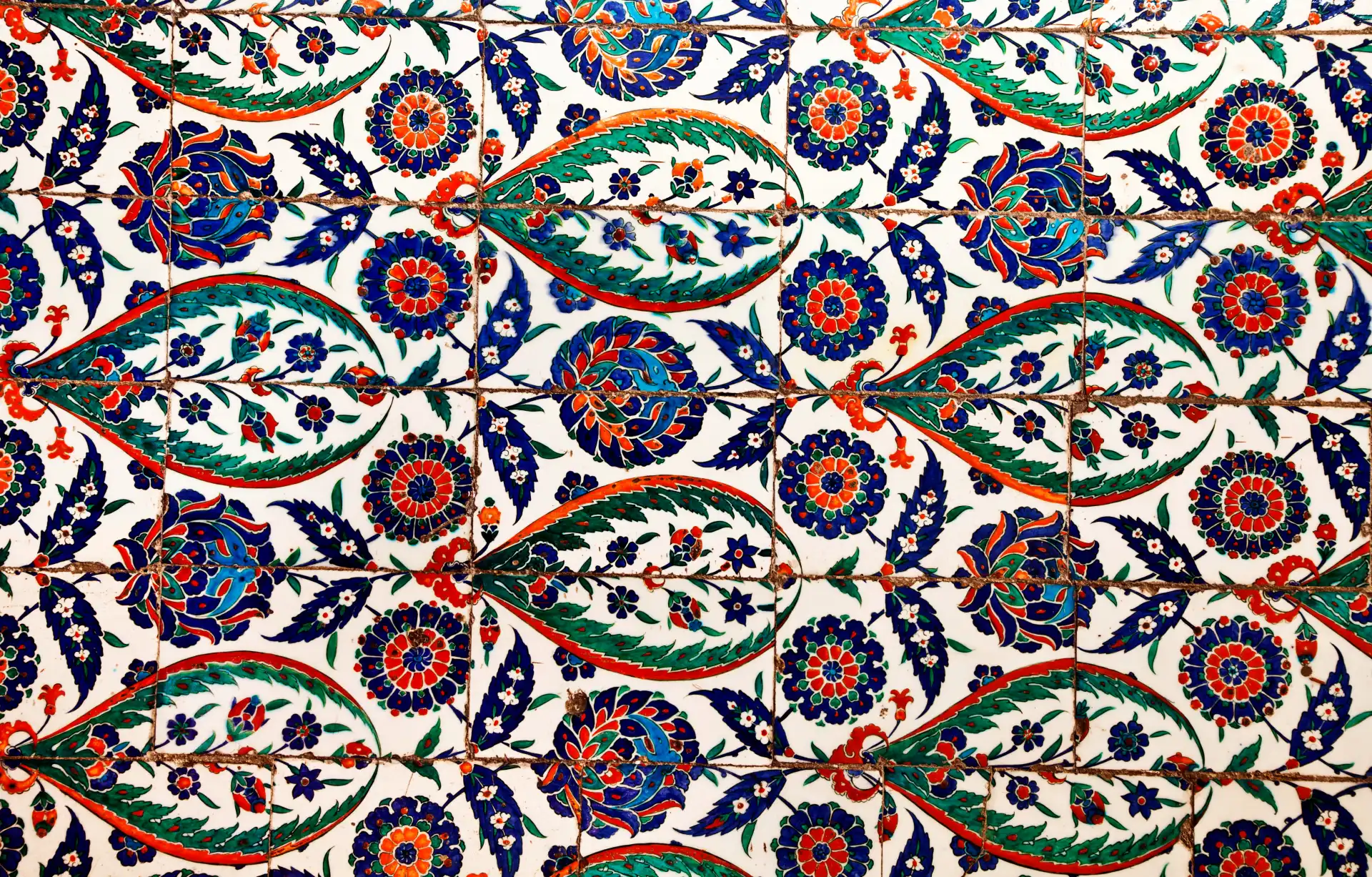
Its interior is adorned with over 20,000 handmade İznik ceramic tiles in more than 50 tulip designs. Their luminous blue hues bathe the prayer hall in an ethereal glow, giving the mosque its beloved name. Over 200 stained glass windows — once a gift from Venice — flood the space with prismatic light that shifts from dawn's warmth to sunset's amber.
The Grand Exterior
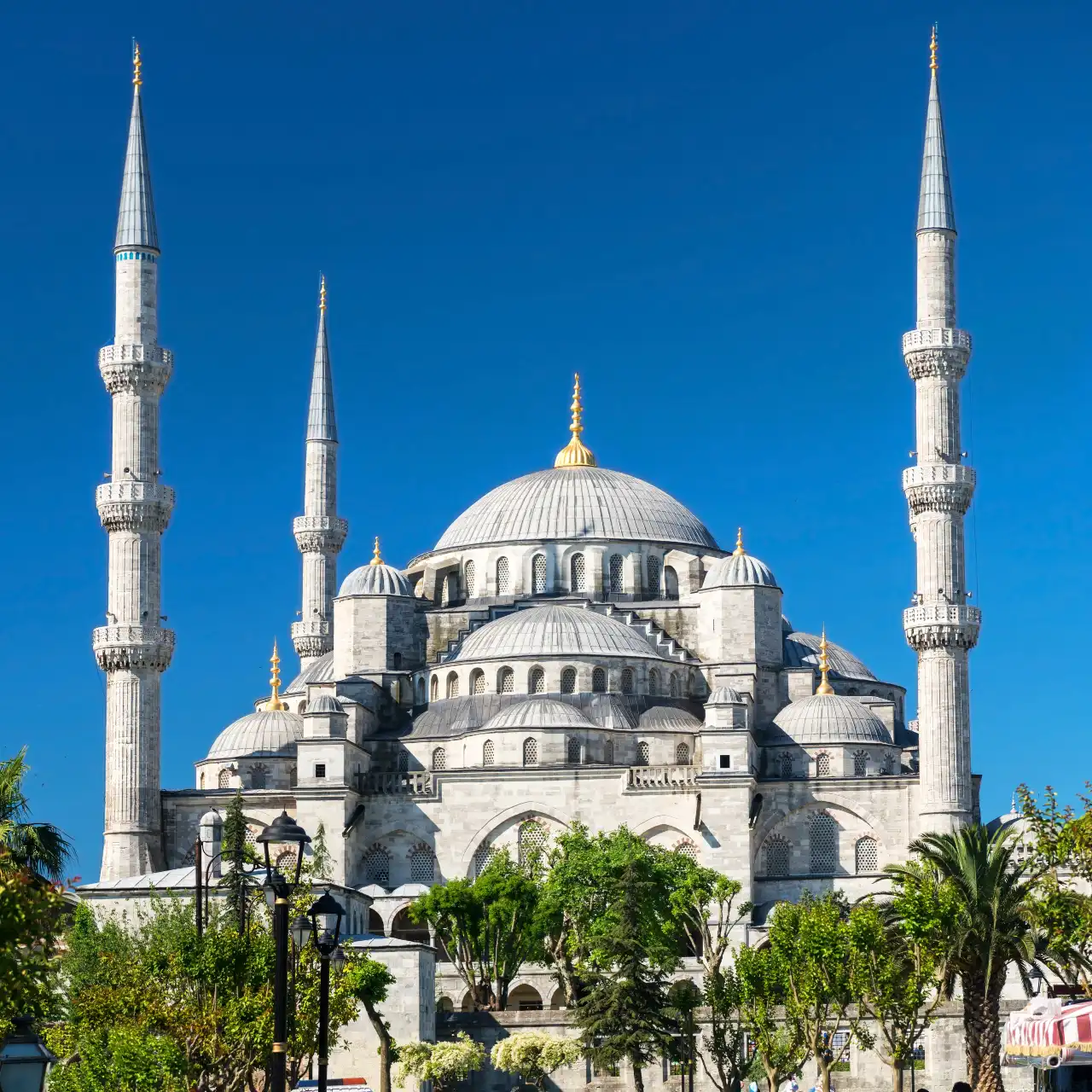
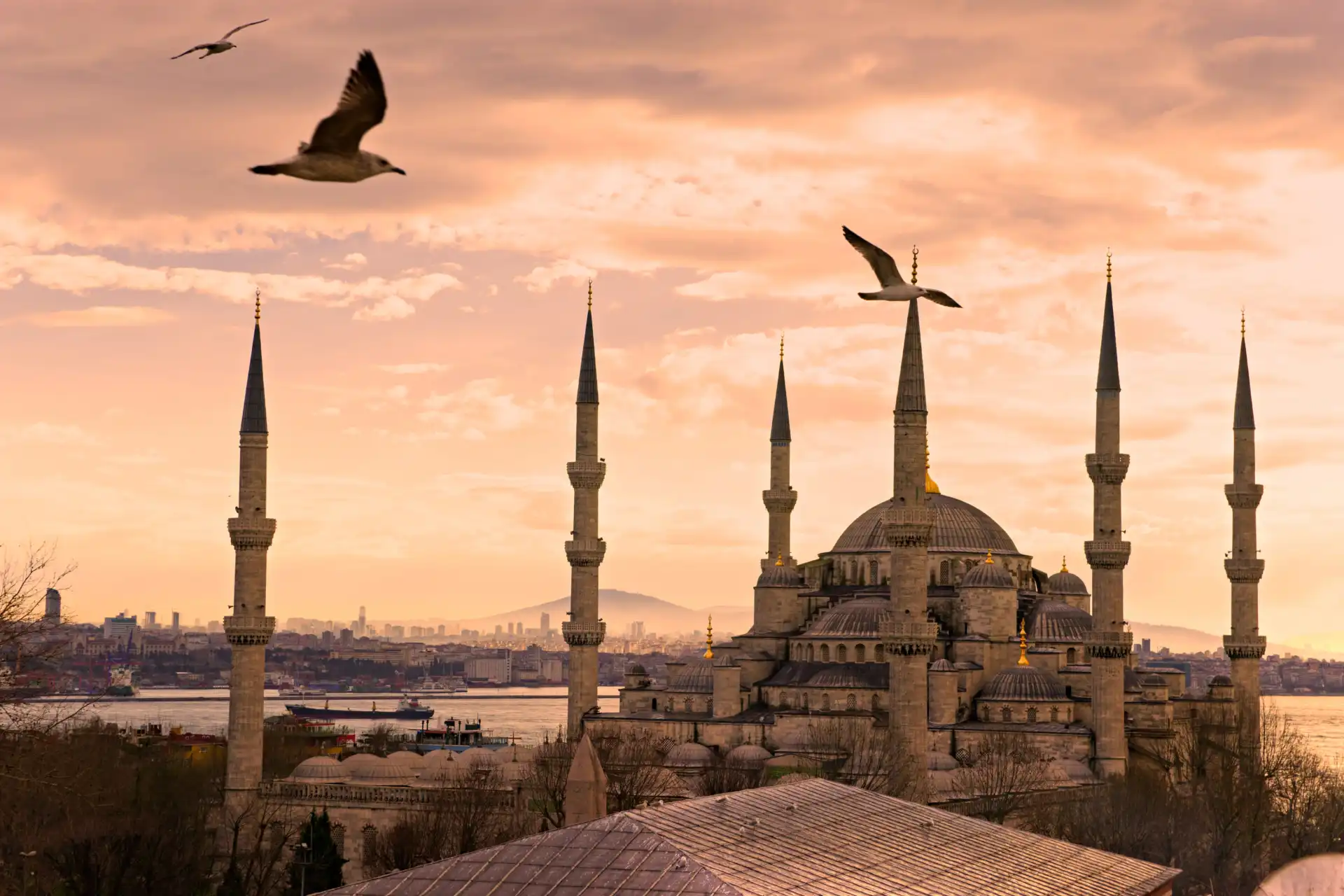
Rising from Sultanahmet Square like a vision from another age, the Blue Mosque commands Istanbul's skyline with its cascading domes and six slender minarets. At sunset, the limestone façade turns to molten gold — a sight that has stopped travellers in their tracks for over four centuries.
Exterior
The iconic silhouette
İznik Tiles
20,000+ hand-painted ceramics
The Dome
43m of cascading wonder
Minarets
Six towers reaching heaven
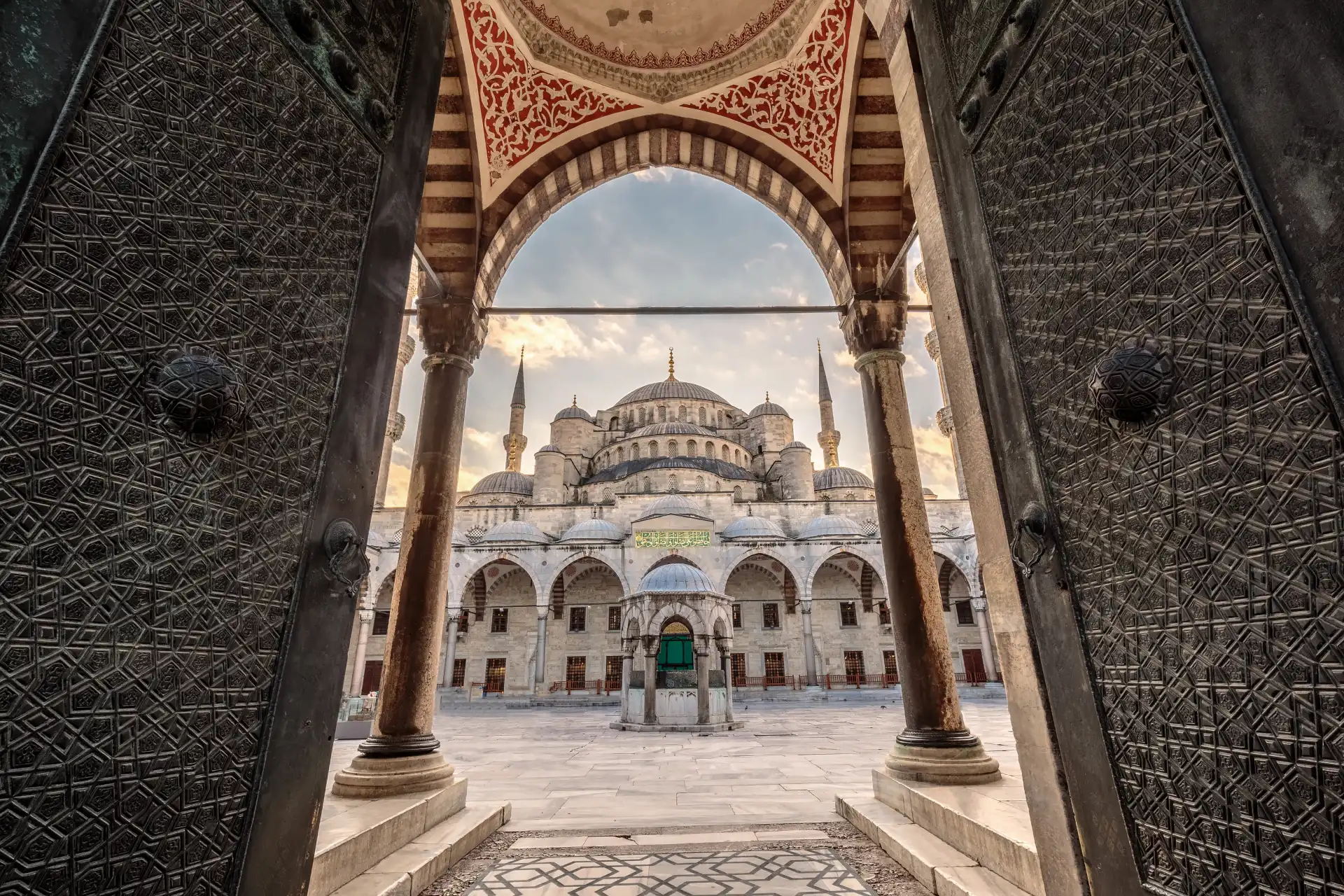
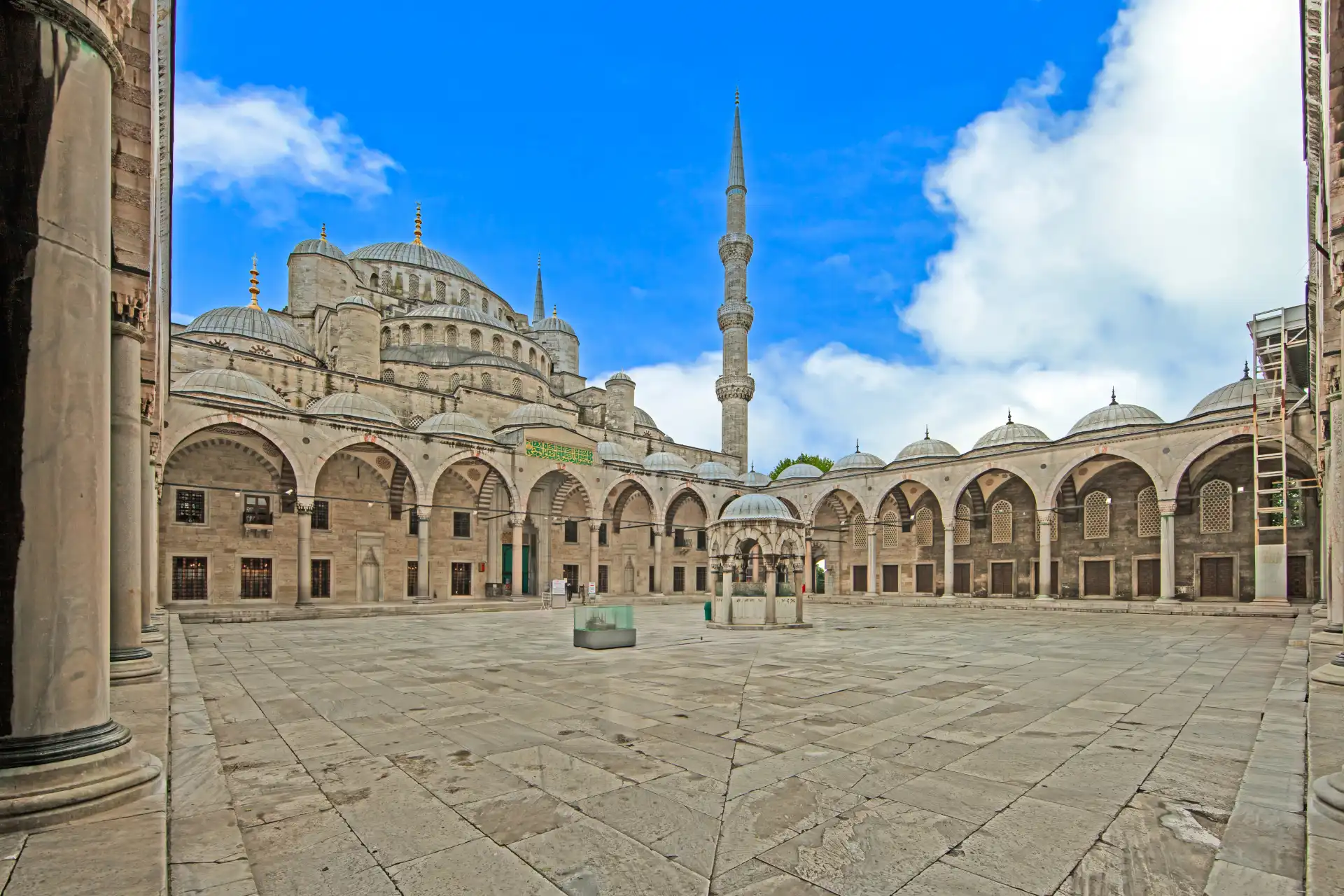
Courtyard
The grand entrance
Through the Lens of Eternity
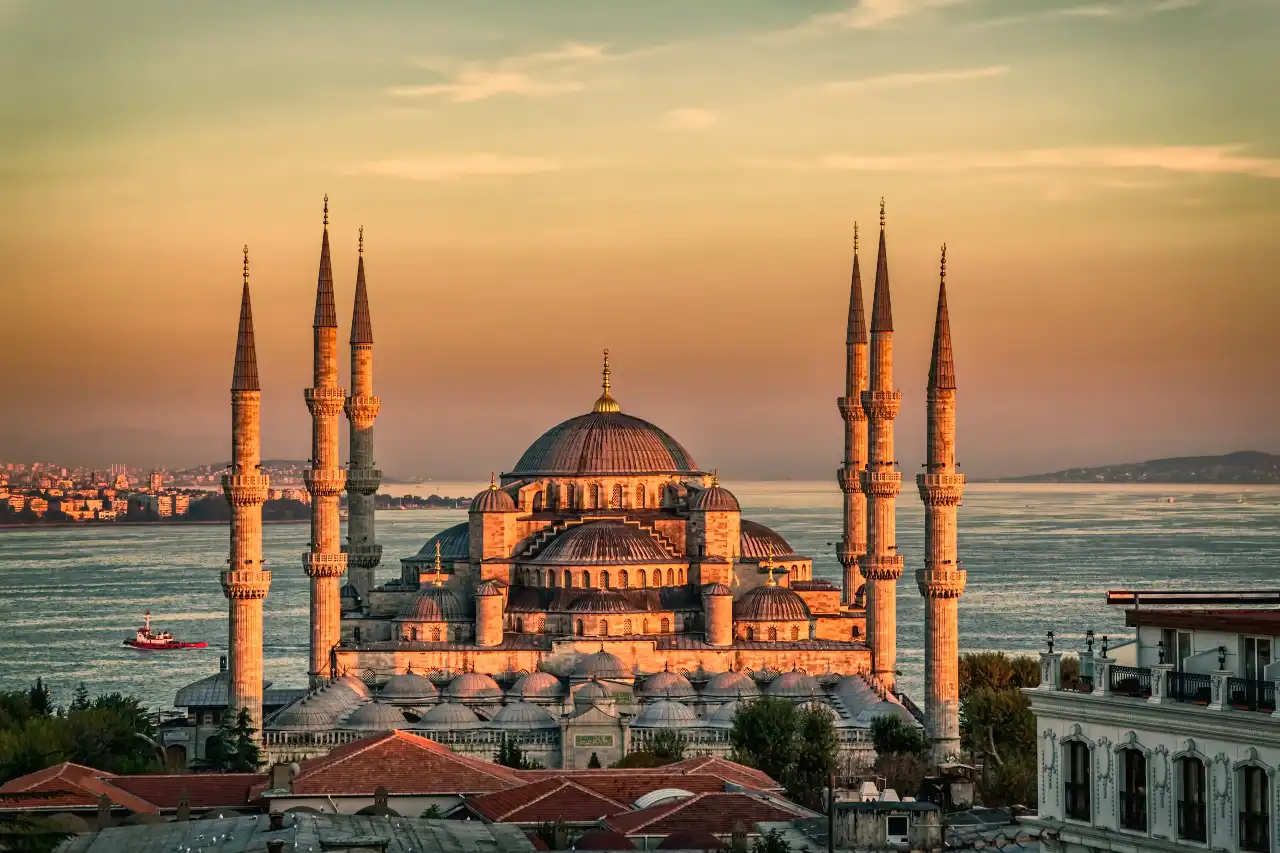
Golden Hour
The mosque glows under Istanbul's legendary sunset
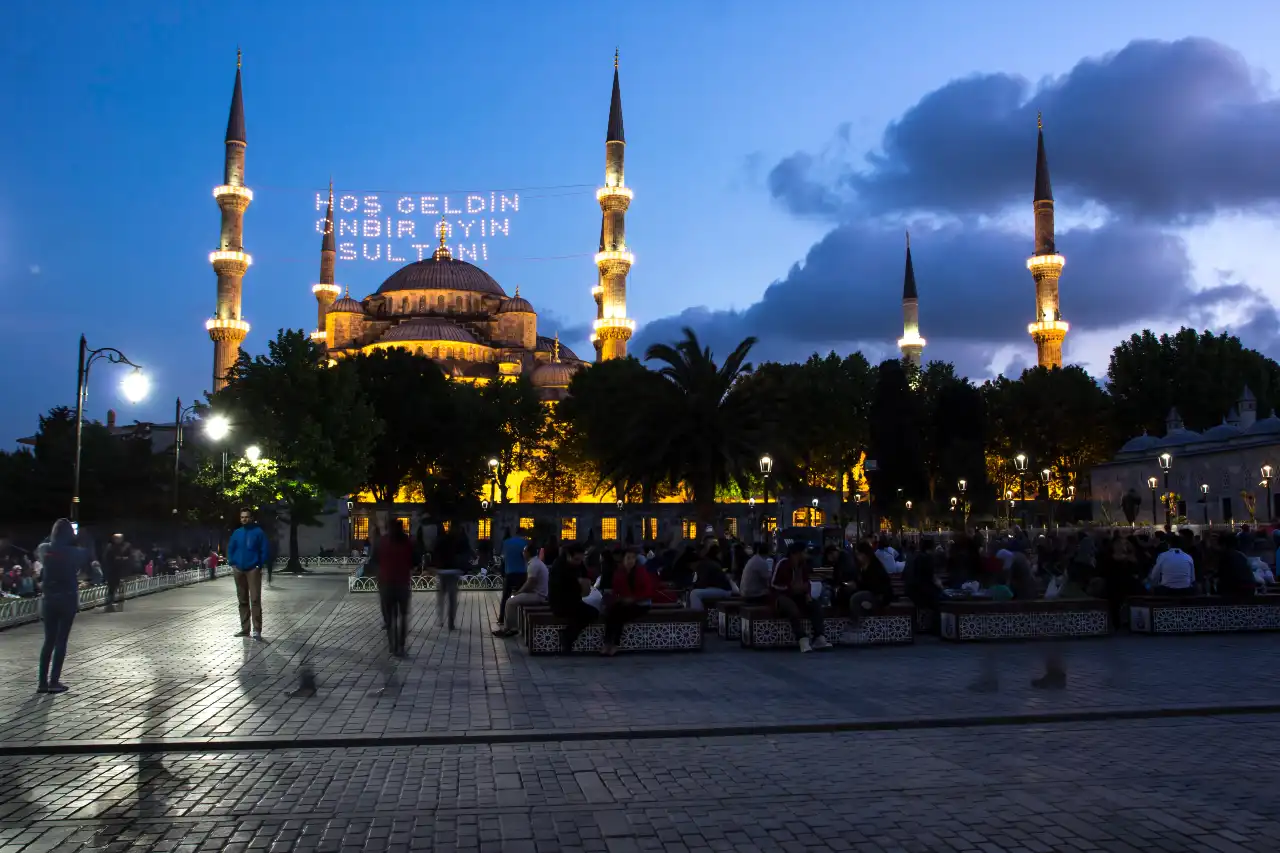
Eternal Skyline
Minarets and domes define the city's silhouette
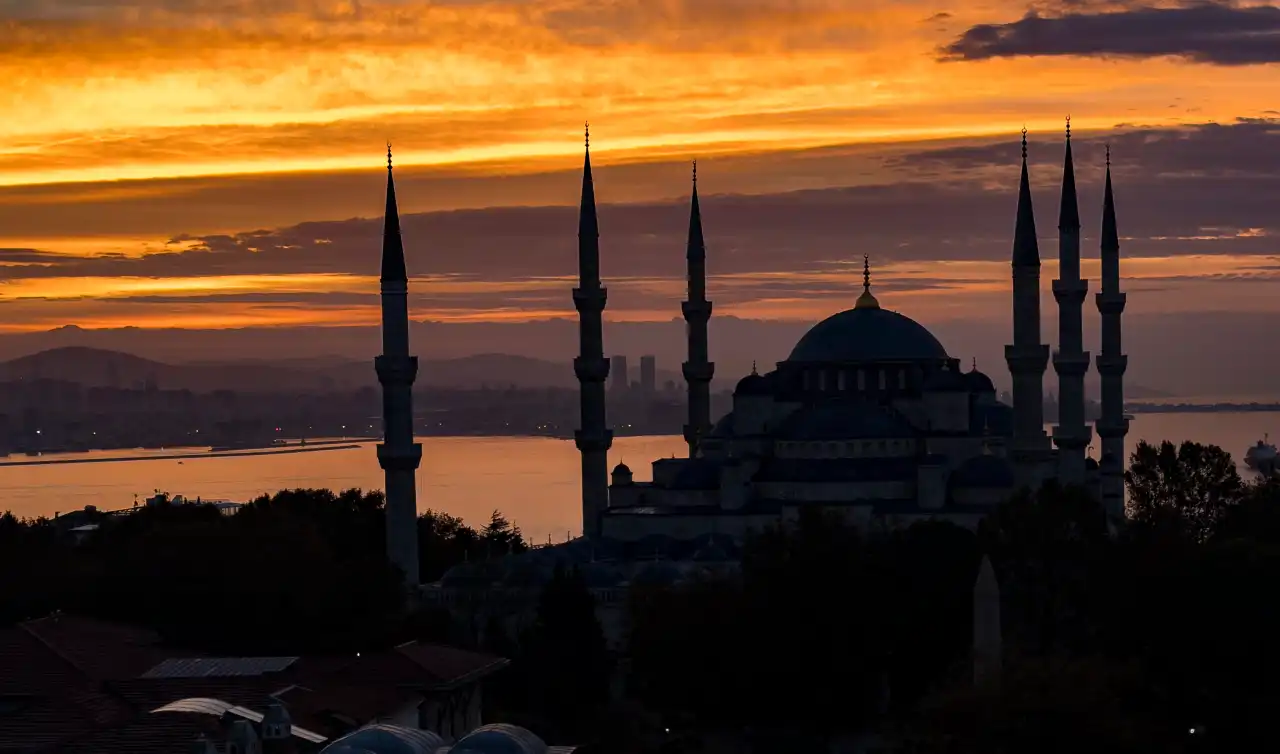
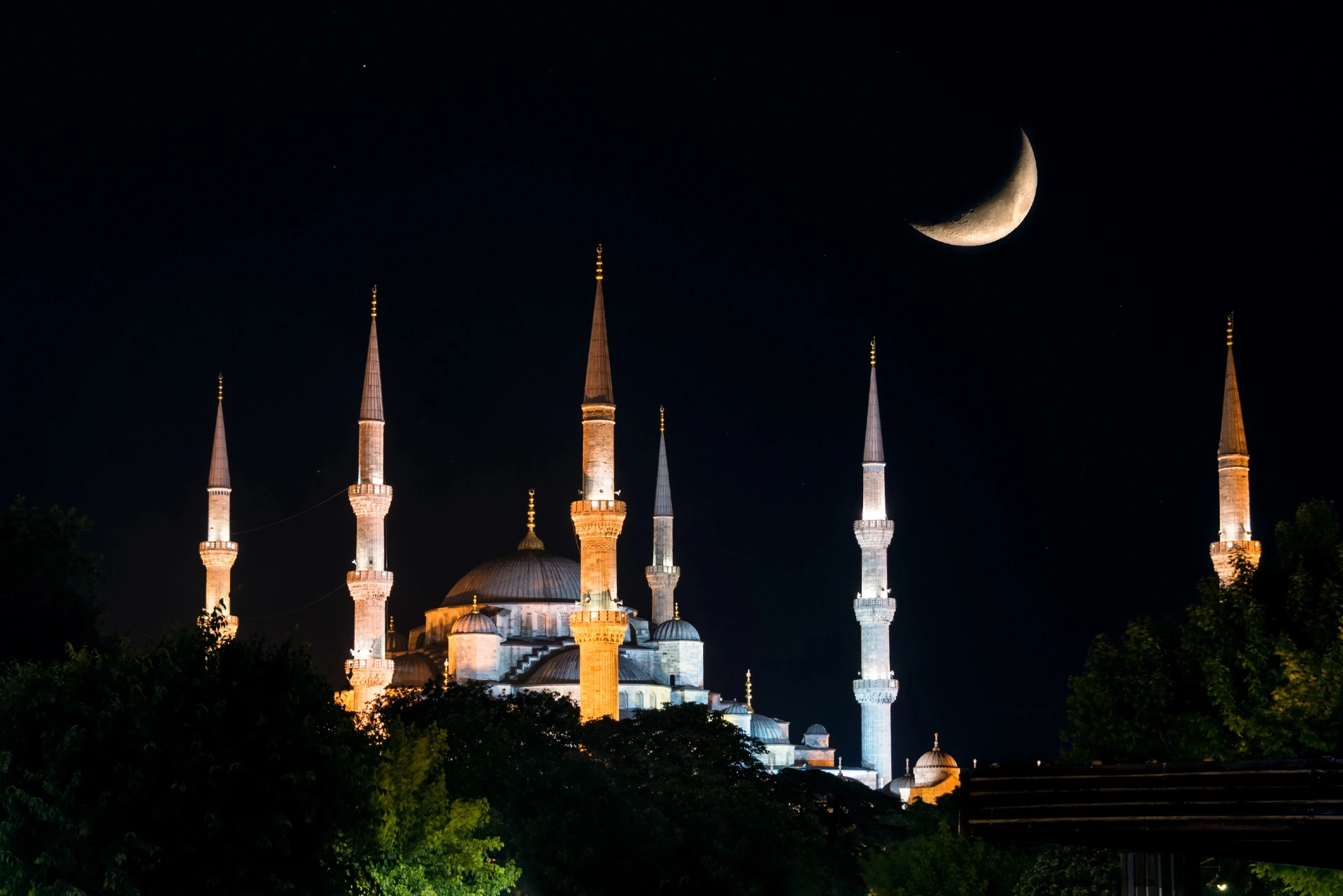
Illuminated Dusk
The mosque's silhouette crowned by the colors of twilight
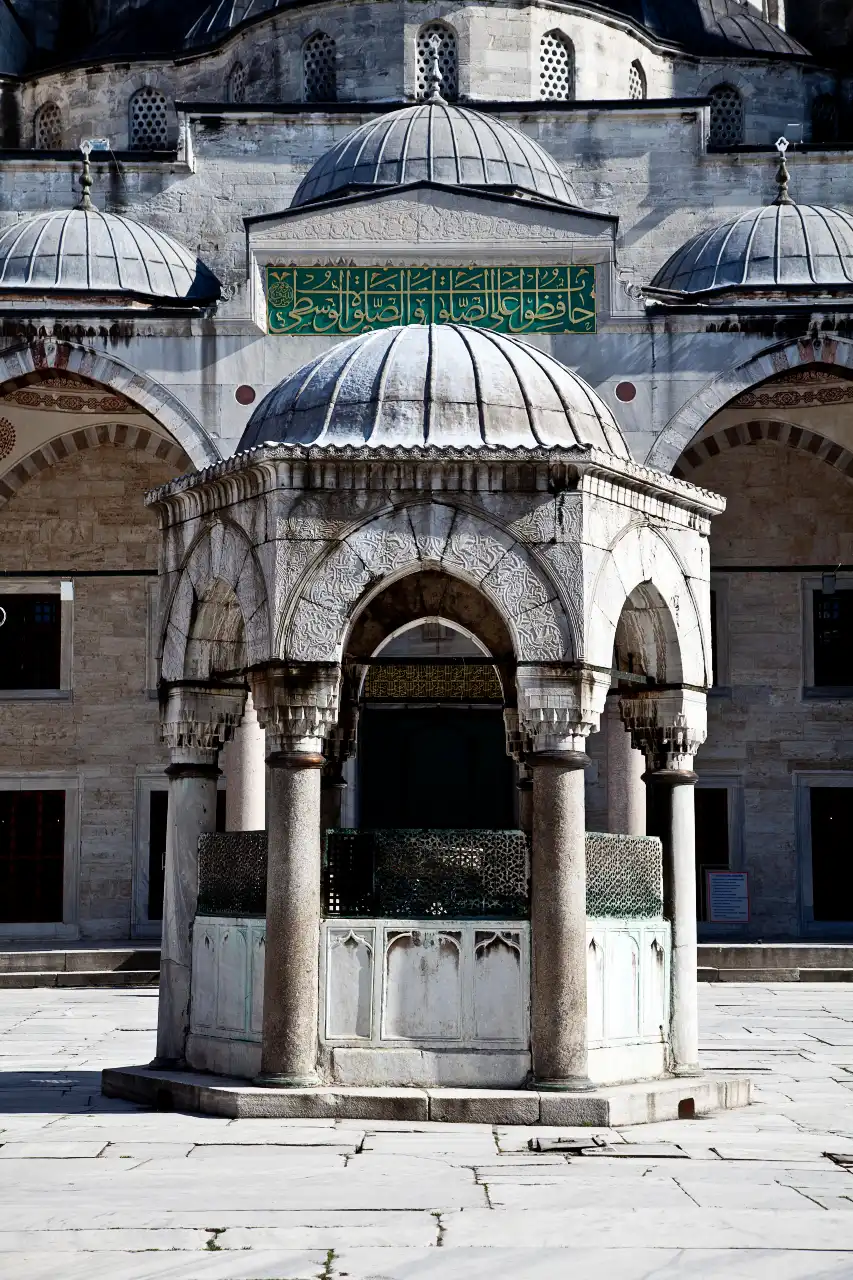
Ottoman Artistry
Intricate details reveal centuries of architectural mastery
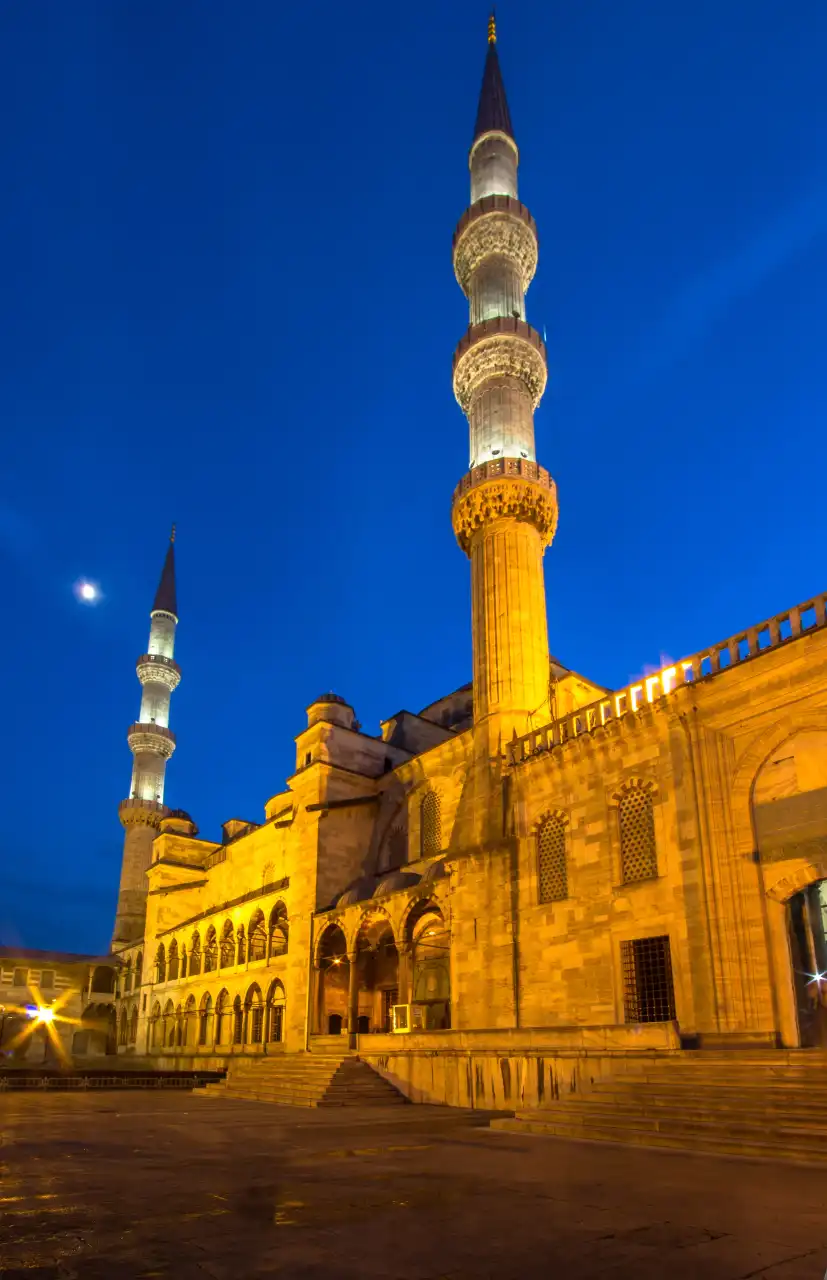
Reaching Heaven
Minarets pierce the sky above the ancient city
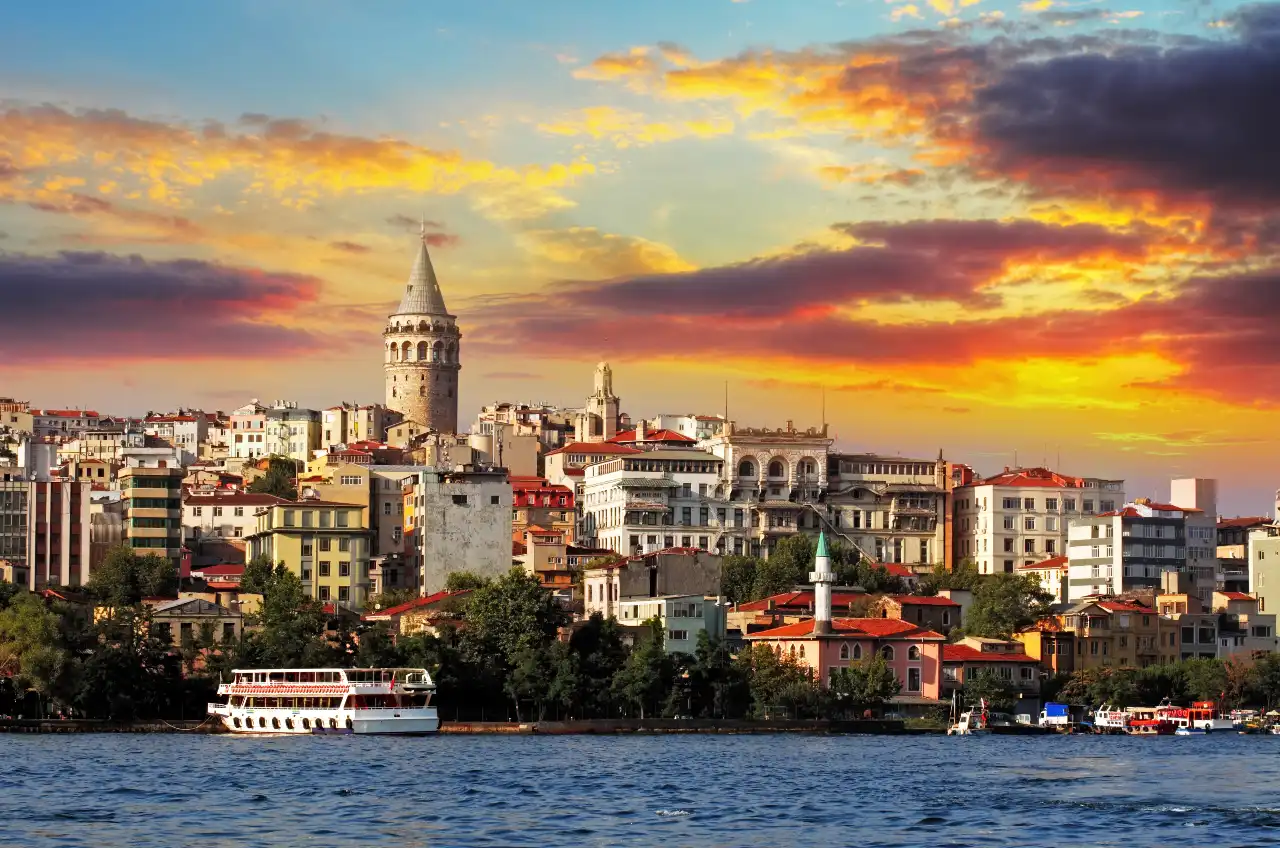
City of the World's Desire
Istanbul's timeless panorama at the golden hour
Grand Courtyard
The largest Ottoman mosque courtyard ever built
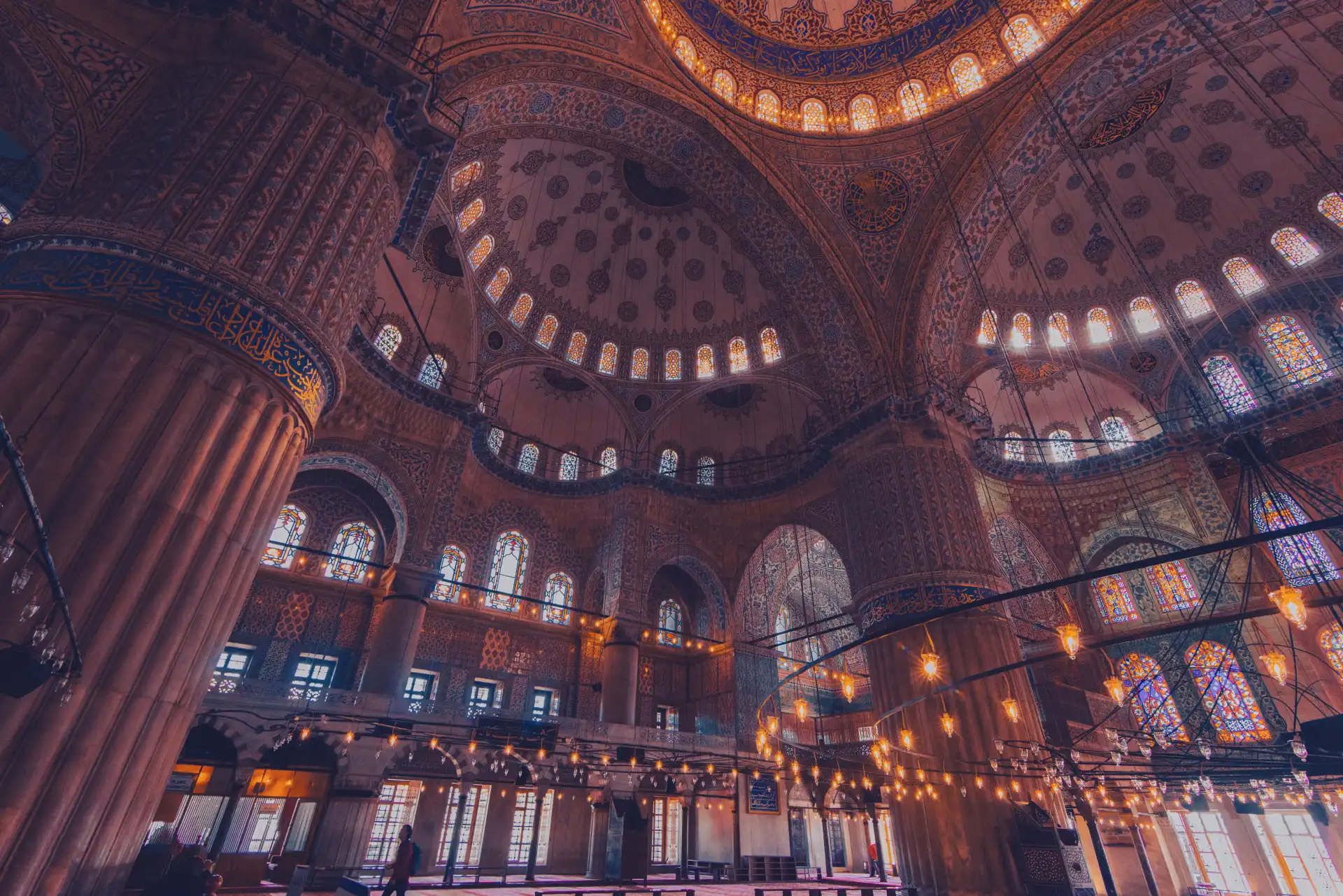
Sacred Interior
Where 20,000 tiles create a symphony of Ottoman artistry
← Scroll horizontally to explore the gallery →
Engineering the Divine
Cascading Domes
The central dome rises 43m, surrounded by four semi-domes, each flanked by three smaller exedrae — creating a mesmerizing cascade that ripples outward from the heavens. Smooth pendentives achieve the transition between dome and pillars in breathtaking elegance.
İznik Tiles
20,000+ handmade ceramic tiles in 50+ tulip designs. Luminous blues, greens, and whites create an immersive atmosphere of transcendent beauty.
Six Minarets
Legend says the architect misheard "altın" (gold) as "altı" (six). The diplomatic solution: funding a seventh minaret for Mecca.
200+ Windows
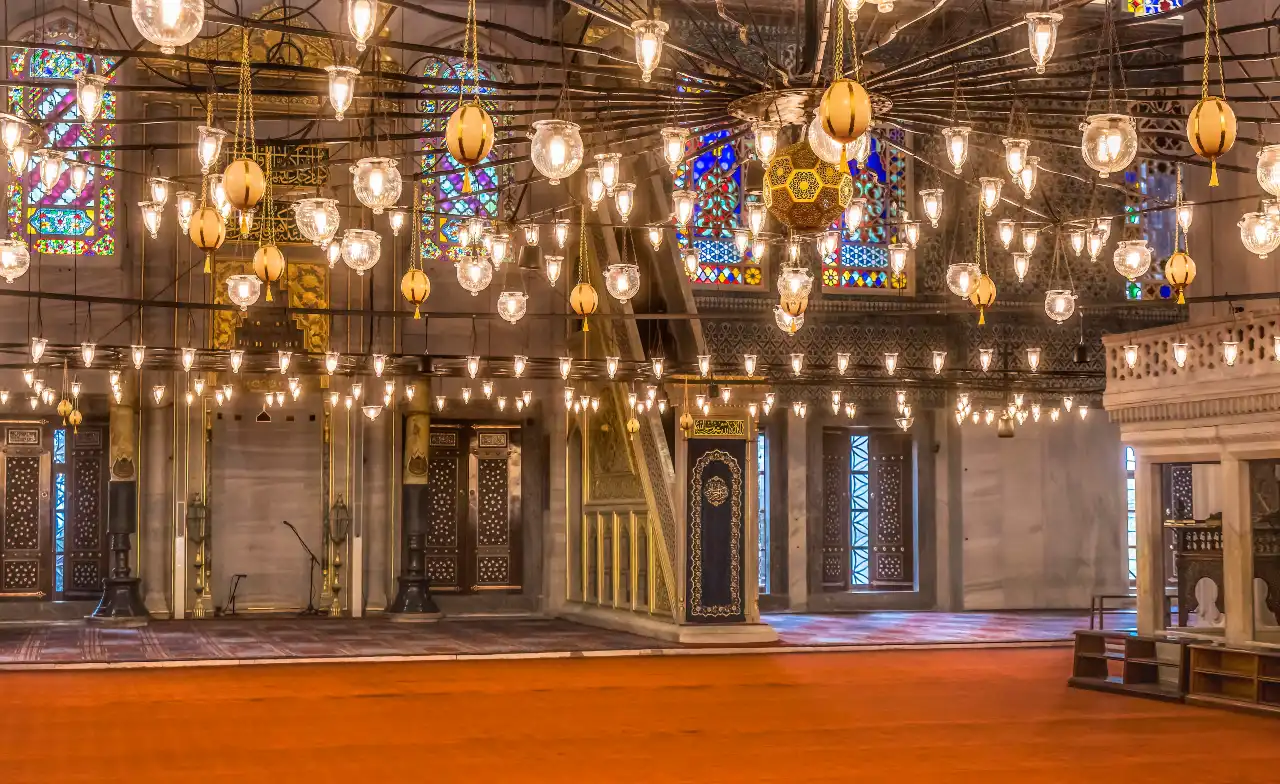
Originally gifted by Venice. The prismatic light shifts from dawn's warmth to sunset's amber throughout each day.
Light & Sound
The carved marble minbar sits at the acoustically optimal position — allowing the imam's voice to carry without amplification. Ostrich eggs were placed on chandeliers to repel spiders and prevent cobwebs.
Sacred Calligraphy & Imperial Complex
Quranic verses by master calligrapher Seyyid Kasım Gubari adorn the walls. The complex once included a madrasah, hospital, soup kitchen, primary school, market, and the Muvakkithane for astronomical prayer-time calculations. Sultan Ahmed I's mausoleum sits at the northern wall.
23.5m Dome
Supported by four colossal "elephant foot" pillars, eight cascading smaller domes complete the composition.
Where architecture becomes prayer and light becomes devotion — the Blue Mosque stands as humanity's eternal hymn in stone, tile, and glass. A Timeless Wonder of the World